Stanislav Ivanov, Leading Researcher, Center for International Security, IMEMO RAS, Candidate of Historical Sciences
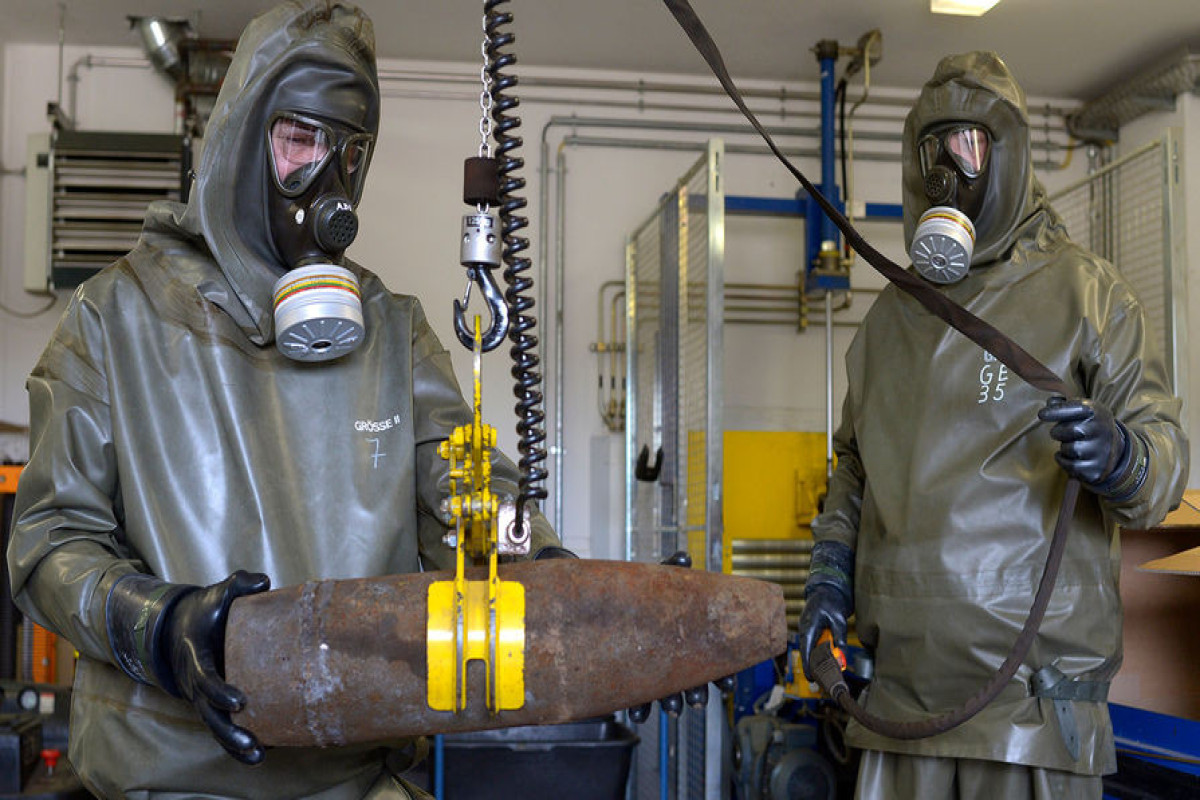
On July 8, 2023, the world’s media reported that the last US chemical munition had been destroyed at the Blue Grass Chemical Destruction Pilot Plant in Kentucky. Allegedly, this means that all declared stockpiles of chemical weapons in the world have been irreversibly destroyed.
As you know, Russia, with the help of a number of foreign states, destroyed its 40,000 tons of chemical weapons by 2017. The US has just now completed the destruction of its 31,500 tons of similar weapons. It would seem that the world community should welcome the implementation of the Chemical Weapons Convention, which was signed by representatives of 193 countries.
As stated on the website of the Organization for the Prohibition of Chemical Weapons (OPCW), 98% of the world’s population lives in the signatory countries of the Convention. So far, only three states (DPRK, Egypt and South Sudan) have not signed this document, Israel has signed but not ratified it, there is no information about the presence of chemical weapons in these countries. The news of another important step in improving the level of security on our planet is overshadowed by two very important circumstances.
Firstly, the victorious report on the destruction of all declared stockpiles of chemical weapons was heard against the background of silence about hundreds of thousands of tons of captured German weapons flooded by the victorious countries after World War II in the Atlantic, Pacific, Arctic Oceans, Baltic, Northern, Kara, Okhotsk, White and other seas, in the Bay of Biscay. During the retreat from the Crimea, Soviet troops also drowned their CW stocks in the coastal waters of the Black and Azov Seas. Obviously, the time has come to clean up these “Augean stables” of the last century, because many hulls of sunken ships, containers and ammunition with chemical weapons are corroded, poisonous substances seep out, poison flora and fauna on the shelf and in coastal waters, and more and more cases of fishermen are being injured. leading trawl fishing.
Secondly, the prohibition and destruction of chemical weapons is accompanied by a no less dangerous and unjustified nuclear arms race. Nuclear powers are increasing the number of deployed nuclear warheads and modernizing them amid the Russian-Ukrainian conflict, the Stockholm International Peace Research Institute (SIPRI) said. Thus, in January 2023, out of 12,512 warheads, approximately 9,576 were in storage for potential use – this is 86 units more than in January 2022. The United States increased the number of deployed warheads from 1,744 to 1,770, Russia from 1,588 to 1,674. In total, about 2 thousand warheads – almost all of them belong to the United States and the Russian Federation – were in a state of high alert (means equipping them with missiles or placing them at strategic air bases). To this should be added 280 French and 120 British combat-ready nuclear weapons.
Since 2019, the United States has deployed about 150 so-called tactical-level nuclear warheads in Europe and Turkey. We are talking about various modifications of B61 bombs with a capacity of 18 megatons, which are located at six military bases in Germany, Italy, Belgium, the Netherlands and Turkey. Special underground storage facilities have been built for them, and in peacetime only the American military is guarding them.
Freezing, at the initiative of Washington, further disarmament processes in the field of strategic offensive weapons, in particular, on the extension of START-3, which expires in February 2026, the expansion of NATO to the East, the buildup of military and military-technical assistance to Ukraine from the collective West, the deployment of a missile and US nuclear weapons in Europe – all this forces Russia to take retaliatory measures. In this regard, the protests of Western politicians regarding the decision of the Russian leadership to deploy in Belarus a certain number of medium-range and shorter-range nuclear weapons look extremely unconvincing.
The complication of relations between the US and its Western allies with Russia and, as a result, the growth of military activity in Europe, has the most negative impact on stability in other regions of the planet. The Chinese leadership has previously stated that it is ready to join the initiatives of Washington and Moscow on nuclear disarmament only if the number of US and Russian nuclear warheads is reduced to the level of China. Allegedly, China now has an arsenal of about 400 nuclear warheads. According to the authoritative international reference book SIPRI, by the end of this decade, the Celestial Empire will be able to reach the level of the United States or the Russian Federation in this area.
One should not forget that following Beijing, Delhi and Islamabad are building up their nuclear missile arsenals (over 160 nuclear weapons in each country). Allegedly, the DPRK has already produced 30 nuclear warheads and has the materials to increase their number to 50-70. Israel, which does not officially recognize the existence of nuclear weapons, according to experts, is modernizing its nuclear arsenal, which has more than 100 warheads.
According to the roughest estimates, there are about 3844 nuclear weapons in the world. Almost all nuclear weapon countries have a triad of means to deliver them to their targets. Despite the treaty limiting the spread of nuclear weapons – the NPT, the above countries are building up or modernizing their nuclear weapons arsenals at different rates, and the number of so-called “threshold countries” that can create nuclear weapons in the shortest possible time is also growing. These include, first of all, Iran.
Thus, the destruction of declared stockpiles of chemical weapons is an important step to preserve life on Earth, but humanity should not stop there. Utilization of chemical weapons flooded in the coastal waters of the seas and oceans, the cessation of the nuclear missile arms race, and in the future, the reduction of nuclear arsenals and the complete ban on nuclear weapons could guarantee the preservation of life on our planet for future generations.
The SCO member countries can play an important role and importance in lowering the threshold of the nuclear threat, since four of them (Russia, China, India and Pakistan) have nuclear weapons, Iran has peaceful nuclear technologies, has a nuclear power plant, Kazakhstan voluntarily renounced nuclear missile weapons and is a reliable supplier of nuclear fuel for nuclear power plants and scientific reactors in the world market.
One must not forget that the population of the SCO countries reaches 3.5 billion people, which is about half of the population of our planet. Their voices must be heard at the UN and other international venues in order to cleanse our planet of all types of weapons of mass destruction (WMD).

Location: 103 Kurortniy Prospekt, Sochi, Russia. The Radisson Lazurnaya Hotel
There must be time
Here are the terms of participation


Comments
0